Archive | The Principality of Monaco RSS feed for this section

Monaco’s Exotic Garden and the Villa Paloma museum

22 Oct

The stunning Exotic Garden of Monaco

The Jardin Exotique (Exotic Garden) of Monaco is one of these places which is stunningly beautiful but is generally neglected by most visitors to the Principality, simply because it is so far out of the way. Located on a rocky promontory at the north-western entrance of Monaco, jutting out over the Old Town and the Fontvieille area, most people just admire it from a distance whilst visiting the Palace Square without travelling up there, which is a bit of a shame. At the same time, the isolated location is part of its charm, affording stunning views over the whole of Monaco.

If you only have a few hours or a day in Monaco, I will be the first to tell you to stick to the main attractions, like the Old Town, the main port and Monte-Carlo, where the world-famous Casino is located. But if you are here for a bit longer or on a repeat visit and have a couple of hours to spare, I would definitely recommend a trip up the hill for a visit of the Exotic Garden and the newly-opened New National Museum of Monaco next door at the Villa Paloma.

The Exotic Garden

Some of the spiky plants on display at the Exotic Garden of Monaco

Built in the early 20th century under the reign of Prince Albert I, what makes this garden so exotic is the abundance of cacti and other succulent (and spiky) plants that you wouldn’t want to get in close physical contact with. The garden isn’t very big, but since it is built almost vertically on the hill, you can just spend a while getting lost in the beautiful walkways admiring both the landscaping of the garden itself, with cactus plants growing out of the cracks in the giant rocks, and the stunning views over the Italian Riviera, the main harbour of Monaco, the Old Town and the neighbourhood of Fontvieille. Just bear in mind that the whole garden is built on a slope, which means that there are plenty of steps and bridges, so I definitely would not recommend this visit to anybody with limited mobility.

One of the stunning views over the Old Town and the Fontvieille neighbourhood from the Exotic Garden

Near the bottom of the garden, there is the access gate to the extraordinary Observatory Grotto (included in the 7 € entrance fee), which is well worth the visit if you can brave the 600 steps (300 down then 300 to get back up) which bring you down almost to sea level. This large natural limestone cavity, located inside the promontory (known locally as a baussu), was discovered in the 1940s and opened to the public in 1950 after plenty of work to make it accessible with lighting, walkways etc. There are regular guided tours which take you into the heart of this weird and wonderful place, which is full of strange geological formations like stalactites and stalagmites and which stays warm all year round, at a constant temperature of around 18 degrees. Obviously, this visit definitely isn’t recommended for people who cannot walk properly, given the amount of steps: also, make sure you have comfortable shoes and the ground tends to be quite slippery due to the humidity inside the cavity. Needless to say, don’t go down there either if you are claustrophobic, as you probably wouldn’t enjoy it much…

The main section of the Observatory grotto, at the bottom of the 300 steps

Another view of the wonderful Observatory Grotto, not for claustrophobes

Finally, also included in the ticket, is a visit to the Prehistoric Anthropology museum, located a bit higher up in the complex, in a rather nondescript concrete block inspired by the kind of architecture which was trendy in Moscow in the 1950s. Valiant efforts have been made to modernize the exhibition area which mainly contains a collection of various ancient animal skeletons (including a rather cool cave bear), but unless you have a particular interest in prehistoric anthropology, a long visit is not essential.

The skeleton of a prehistoric cave bear, probably the most interesting exhibit in the Anthropological Museum, that says it all!


The New National Museum of Monaco at Villa Paloma

The brand new museum at Villa Paloma, for an interesting experience and a bit of culture after visiting the Exotic Garden

This is located in the Villa Paloma, located next door to the exotic garden: visitors with a combined garden and museum ticket (10 €) can just follow a passageway through the side of the anthropological museum into the National Museum and there is an immediate change of atmosphere.

The museum was opened in 2010 after extensive renovation work on a residential villa and is therefore extremely plush, modern and original. There are currently no permanent exhibits there so it all depends if you are interested in what is going on during your visit. The choices made are pretty eclectic: for example when I visited last week, they had just launched a 3 in 1 exhibition including a fascinating collection of photos of Monaco taken between 1860 and 1880 (so rather different from what it looks like today), an artistic film which I didn’t have the time to see and an exhibition of artistic photos of Princess Caroline of Hanover taken between the 1970s and today by artists like Andy Warhol and Karl Lagerfeld. The presentation is resolutely modern and rather appealing, with plenty of iPads available to get additional information on the exhibits. And there is a very nice panorama from the museum gardens, where the local schools have planted a vegetable patch (I did mention that the museum was quite original).

So if you are already in the area and have the whole morning or afternoon, it is probably worth getting the combined ticket and having a look around after visiting the Exotic Garden.

Finally, since I’m already covering this topic, I’ll also mention that the Villa Paloma has a sister museum, also part of the “New National Museum of Monaco”, called Villa Sauber. This beautiful building is located on the opposite side of town in Monte-Carlo, close to Larvotto beach and directly opposite the Grimaldi Forum conference centre. This mainly contains a vintage doll collection, some of which are automated, as well as some temporary exhibitions, which share the same intelligent and original presentation as in Villa Paloma, so the Villa Sauber is probably worth visiting if you are interested in that kind of thing (unfortunately I’m not that into vintage dolls).

Getting there   

By bus: the Jardin Exotique is located at the end of the very convenient number 2 bus line which crosses most of the major tourist attractions of Monaco and is therefore directly accessible from the Old Town, the port of Monaco, from the Casino (tourist office) and from the upper exit of the railway station. All buses in Monaco cost 1 € per journey (you can also get a one-day pass for 3 €) and buses on the number 2 line run about every 10 minutes on weekdays. However they are much less frequent on weekends (every 15 minutes on Saturdays and every 20 minutes on Sundays). Here are some full timetable details. I would recommend this mode of transport if you don’t have a car as the walk up is pretty uphill and boring, crossing a rather bland residential neighbourhood.

By car: you can park your car at the Jardin exotique public car park, located about 5 minutes away. Here is some information about the prices and how to get there: careful, the first hour is free but it gets expensive if you stay longer.

Useful links

Jardin Exotique de Monaco: more information about the Exotic Garden, Observatory Grotto and the Anthropological Museum, as well as the latest prices and opening times. The current entrance price is 7 €, giving you access to the three above-mentioned sites.

Villa Paloma and Villa Sauber: same information for the two components of the New National Museum of Monaco. At the moment, the entrance fee for each one is 6 € but there are various combines ticket options if you want to see both.

I would definitely recommend the 10 € combined ticket for both the Exotic Garden and the Villa Paloma if you have time to see both.

Visiting Monaco on a tight budget: yes, it is possible!

6 Oct

Monaco: gorgeous, but not as expensive as you may think. Follow the advice below for a rip-off free experience!


Some of you may be contemplating a trip to Monaco in the near future but have this impression of the Principality as a place where you cannot get by with under 1.000€ per day. Naturally, if you do have the desire to spend that amount, you can easily find hundreds of exotic ways of getting rid of large sums of money in a couple of minutes!

The good news is that Monaco is also a place where normal people, not just multi-millionaires, live and work, and that there are therefore plenty of ways for the common of mortals to have a wonderful sample of what the country can offer on a very reasonable budget. Follow the advice below and you’ll find that, contrary to popular belief, Monaco is much cheaper than most major cities in Europe on several different levels.

  1. WHERE TO STAY?

There are a couple of reasonable places in Monaco: just bear in mind though that they’re quite small and you need to book well in advance. Some examples are Hotel de Versailles and Hôtel de France, both located next to the Place d’Armes market square and 5 minutes from the harbour: double rooms there cost between 70€ and 100€ depending on the period (much more during the Formula 1 Grand Prix). You can find cheaper places elsewhere on the Riviera, but then again, you’re staying in the heart of Monaco and there is no cumbersome public transport to travel on each day.

Alternatively, you can find cheaper options in nearby Beausoleil which has several comfortable 2 star hotels within easy walking distance of the Casino of Monte Carlo or the Grimaldi Forum conference centre for business travellers.

Nice can be even cheaper, depending on the accommodation: travel is easy, a bus ride on line 100 takes about one hour from the terminus close to Place Massena but only costs 1 € for a single ticket along one of the most beautiful stretches of coastline in the world, so well worth doing if you are not in a hurry. A train ride is much faster, at 25 minutes, and smoother but is slightly dearer, at 3.50 € one way (a return is double the price).

Villa Kerylos in Beaulieu: this is the kind of view you get on the 3.50€ train or the 1€ bus coming into Monaco from Nice

  1. GETTING AROUND MONACO

Monaco isn’t a very large place but getting around on foot can be quite tiring after a while due to the very uneven terrain and the heat in the summer. Fortunately buses are frequent and very cheap, with a very extensive network: a single ticket is just 1 € anywhere in Monaco and an even better deal is the one-day unlimited pass which just costs 3 €.

This pricing also applies to the wonderful “Bateau Bus”, an electric boat that crosses the harbour from one side to the other every 20 minutes, so is perfect to get from Monte-Carlo to the Old Town whilst taking a relaxing cruise amongst the yachts in the world-famous Monaco harbour. Can you imagine anywhere else in the world where that is possible for 1 euro?

View from the Bateau Bus - you can use this electric boat to take a mini-cruise across the harbour for just 1€

There is also an extensive night bus network within Monaco, starting at about 9pm and which costs exactly the same as during the day.

By the way, don’t bother with taxis, the minimum cost for any trip within Monaco is 12 € – go outside of Monaco and it will almost double if you go outside. Just in case you were considering it, a taxi fare to Nice is around 70 € and a trip Nice airport will set you back 100 € (the same as a helicopter ride if you’re alone), so just take a bus or a train.

  1. SIGHTSEEING AROUND MONACO FOR FREE

You are now in Monaco and armed with your unlimited travel 3€ bus pass – there is a whole host of things you can do for free:

-          Head up on foot or by bus onto the Rock (the Old Town), follow my walking tour and soak in the atmosphere and the wonderful views. It’s best to do this early in the morning or late in the afternoon to avoid the crowds but if you have no choice, do it anyway, it’s worth it…! You can always stand in the sunshine on Palace Square and watch the changing of the guard ceremony with all the crowds if you enjoy that kind of thing, every day at 11.55am sharp. All the attractions are free (public gardens, the Cathedral etc) except for the inside of the Palace (8 €, tickets can now be bought online) and the Oceanographic Museum (14 € – steep but definitely worth it, bear in mind they have a rather large aquarium and need to feed the sharks!).

Wander around the streets of the Old Town

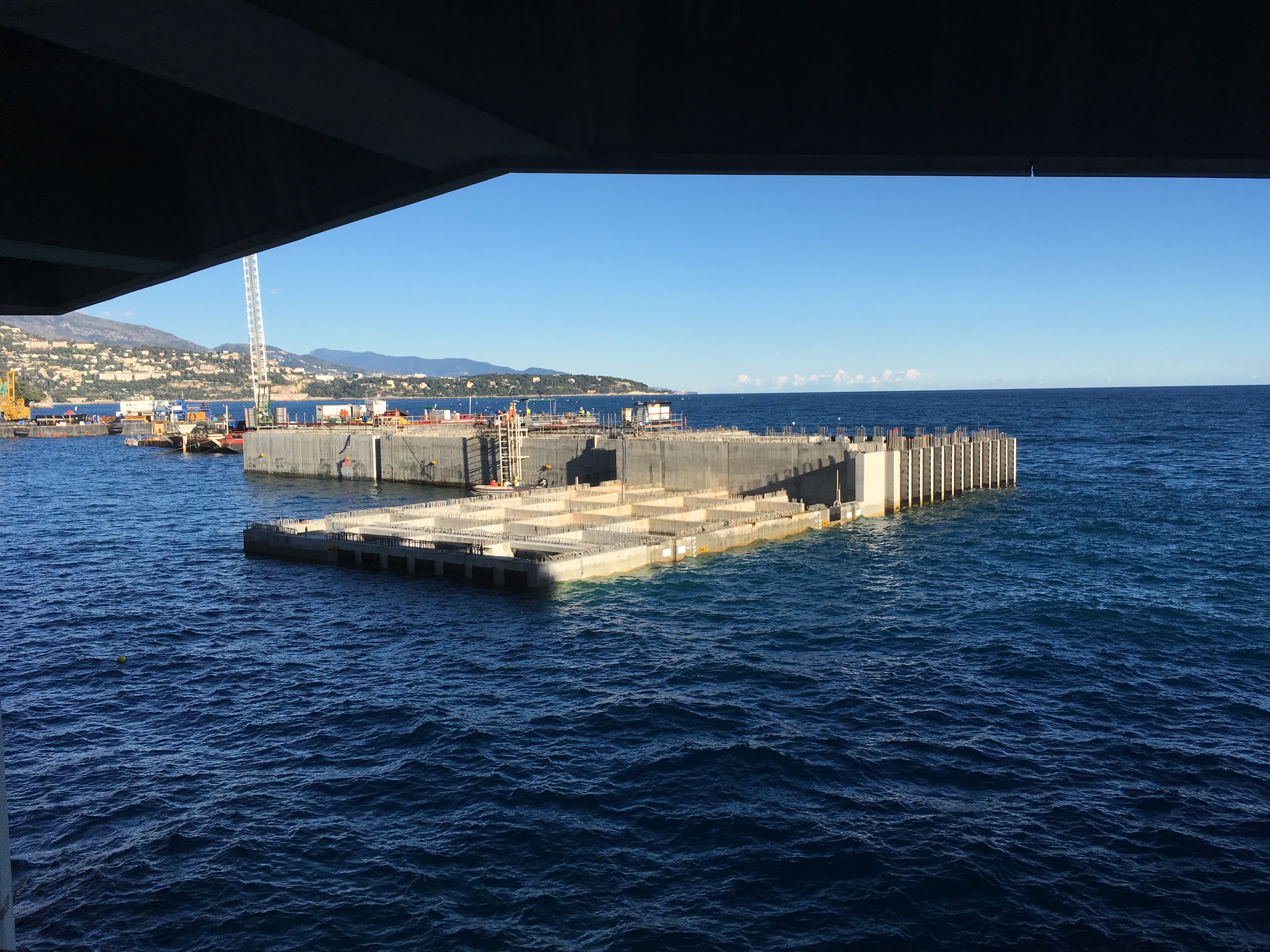
-          Walk to the tip of the gigantic semi-floating jetty sticking out of the Rock where the cruise terminal is (only if there are no cruise ships, otherwise it’s shut) and enjoy the fabulous panoramic views.

The view from the semi-floating jetty over France and Italy

-          Hop onto the Bateau Bus (full information here) towards the Monte-Carlo side using your bus pass, whilst enjoying wonderful views of the sea, the mountains and the yachts.

The electric Bateau Bus, an interesting way of getting from A to B and to get wonderful views of the harbour for the price of a bus ride.

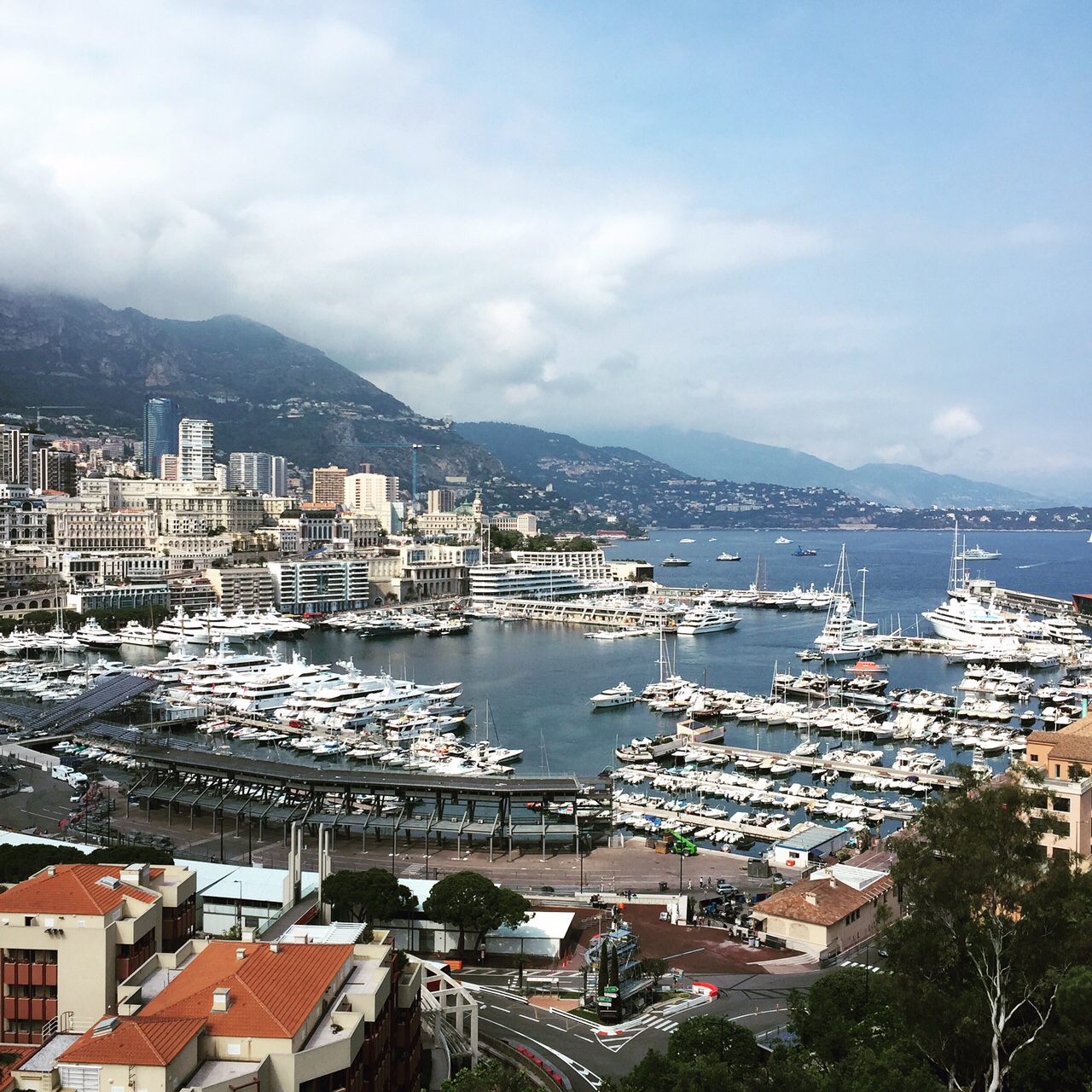
-          Walk around the Formula 1 Grand Prix circuit or follow it by bus (a combination of lines 1, 2 or 6), it will take around 1 hour, excluding photo stops and is highlighted on all the tourist maps (available for free virtually anywhere in Monaco).

View over the Grand Prix circuit during the actual race: you can walk down this waterfront the same evening, a few hours after the race!

-          Check out the luxury cars in front of the Casino and the Hotel de Paris on Casino square, explore the lush casino gardens and wander through the marble alleyways of the Metropole shopping centre.

The entrance to the Monte-Carlo casino

-          Have a flutter at one of the casinos: the Café de Paris, the Sun Casino (located in the lobby of the Fairmont Hotel just below) and the slot machine section of the main Casino are free to access but there is a very long list of things that are banned at each entrance (ex. shorts, cameras, phones etc). To access the much more elegant private section of the main Casino, you will need to pay 10 €, bring your passport and dress smartly, although a tux is no longer compulsory.

Entrance to the Sun Casino, located inside the Fairmont Hotel

-           Enjoy the great views over the whole of Monaco from the Casino terraces just behind (basically the roof garden of the Fairmont hotel) – probably my favourite view of the whole of Monaco.

View over the back of the Casino from the Casino terraces on top of the Fairmont hotel

-          Lie on the beach at Larvotto (several sections are private but there are also public sections – just find the bits with no plastic deck chairs) and have a swim in the clear blue waters, under 10 minutes’ walk from the Casino and just behind the Grimaldi Forum conference centre. There is also a rather rocky but lovely secluded beach on the side of the Rock between the cruise terminal and the Oceanographic Museum.

Larvotto beach: a great place to relax after a long day's sightseeing

-          Have a pleasant stroll through the authentic Japanese garden, located between the casino and the Grimaldi Forum.

The Japanese garden of Monaco

-          On the opposite side of town (easily accessible by bus no. 6 from anywhere central), have a wander along the second port of Monaco, that of Fontvieille, built on reclaimed land in the 1960s, which has its fair share of yachts as well as a lovely view of the Cathedral and the Oceanographic Museum. Then visit the lovely Princess Grace rose garden – just check with the tourist office beforehand if the roses are in flower or not.

Overhead view of the Port of Fontvieille, built on reclaimed land, and its unique "neo-Provençal" architecture

I think there’s more than enough free stuff to do in that list for you to have a very busy day!


  1. WHERE TO GET DECENT FOOD AND DRINK ON A BUDGET

For lunch, I would suggest to eat something typical and good: the perfect place is around the Place d’Armes market which is where the locals eat (see my walking tour of the Old Town for a description). Go around the inside of the market and get for a portion of socca, a local chick pea pancake snack, for around 3€ in the bar called “Chez Roger”. You can also taste a barbaguian, a typical Monegasque sort of fried pastry stuffed with spinach or chard, cheese and a little bit of rice, or else some stuffed vegetables. A filling snack should set you back no more than 5 or 6 €.

The typical Monegasque barbaguian, a great snack for lunch

If you are really feeling the pinch, you can head over to the Carrefour supermarket just 5 minutes away in Fontvieille and get anything you want: honestly, supermarket prices in Monaco are pretty much the same as anywhere else in France and much cheaper than for example the UK, Scandinavia or even a Monoprix in central Paris.

Before dinner, after a long day’s sightseeing, you can have a pit stop at the Brasserie de Monaco, located right on the Grand Prix circuit on the harbour: they brew their own organic beer there according to Bavarian traditions (white, pils or amber ale) and you can even take tours of the place. Their half-price happy hour lasts from 5pm until 8pm and a pint of beer (50 cl, ie. a French pint!) costs just 3 €, a real bargain for beer lovers. A glass of organic wine costs the same amount and you can also get reasonably priced Monegasque snacks like pichade (a focaccia with tomatoes, olives and fried onions) or pissaladière (the same thing but without the tomatoes). You can even bring back a souvenir coaster!

Apéritif snacks at the Brasserie de Monaco on the harbour

Other bars on the same strip (known as the Darse Sud) have a similar Happy Hour: the famous la Rascasse bar and casino is located right on one of the bends of the Grand Prix circuit and has half-price drinks (4 € for a glass of wine) until 11pm. Don’t forget that wine by the glass tends to be considerably cheaper than beer on the whole of the Riviera, but there is less of a price difference than in Italy.

La Rascasse, good for happy hour drinks but also if you want to stay out a bit later (but drinks are more expensive after 11pm)

For a nice sit-down dinner, there are plenty of places where you can get a simple main course (top quality pizza, pasta or a dish of the day), a typical dessert (think tiramisu, panna cotta or profiteroles) and some wine for under 25€ in a nice location. Most of the places within this budget range are located in or around the area surrounded by the harbour and rue Grimaldi, so I would suggest that you walk around and choose what you fancy according to the location and what’s on the menu. Particularly pleasant are the restaurants on the pedestrian Rue Princesse Caroline (perpendicular to the main harbour) and on Boulevard Albert 1er, the departure grid of the Grand Prix running alongside the waterfront. So none of these places will break your budget.

There are also plenty of surprisingly good and even more reasonably priced places up in the Old Town, which tend to serve more local food – you can easily find a three-course menu for between 17 € and 22 €. Only go there for dinner though, as at lunchtime they are packed with tourists and you will have to slalom between the souvenir-buying crowds. But if you get dinner there, you will be rewarded by silence in the streets, a lovely atmosphere and a priceless “Monaco by night” view of the yachts in the glittering harbour below.

So I hope that all this information has convinced you that Monaco is hardly a rip-off destination as long as you know where to go – don’t let the myths dissuade you, just come here and sample the place for yourselves!

Walking Tour around the Old Town of Monaco

5 Oct Typical medieval alleyway in the Old Town of Monaco

Typical medieval alleyway in the Old Town of Monaco

This is basically part of the walking tour I recommended to guests staying at my hotel a few years ago.  Allow about 90 minutes at a leisurely pace, excluding food pitstops or visits of monuments.

The tour starts at the Place d’Armes: the central market square within easy downhill access from the train station (turn right when exiting the train from Nice towards the “Fontvieille” exit” and go through the tunnel with travellators then follow the signposts and the crowds of people). The typically “Provençal” (ie. slightly overpriced but with lots of good quality “Mediterranean” produce) market is open every morning until around 12pm, so could be worth a quick stopover to have a nice coffee or to grab a snack – there are several reasonable places inside, including one selling “socca”, a typical regional pancake made of chick pea flower. The Place d’Armes is also a great place for people-watching and to see real Monegasque locals going about their daily business (quite a feat especially in the summer), and where most gossip is exchanged about what is going on in town.

Place d'Armes market, Monaco

Place d'Armes market, Monaco

- Looking up from the Place d’Armes, you can already notice the fortifications protecting the Prince’s Palace on the side of the Rocher, notably the Bastion de Serravalle, which dominates the street, as well as the elegant Italianate porticoes of the Palace itself and the fake-medieval clock tower, which was in fact built in the 19th century to look old.

- The quickest way up the hill is to climb the steps of the Rampe Majeure, a 16th century staircase affording great views of the harbour as you climb up. It’s a bit steep but not a very long climb worth it once you get up and see the view.

The Rampe Majeur, climbing towards the Palace Square

The ramp culminates on Palace Square, where you’ll be greeted by the bronze statue of a monk concealing a sword, representing François Grimaldi, also known as “Malizia”, who stormed the Palace in 1297 and founded the ruling dynasty. The Palace Square accommodates the infamous Changing of the Guard at 11.55am every day – to be honest don’t bother standing with the hot and bothered crowds to get a glimpse of the Palace Guards walking in the sun unless you’re a pomp aficionado…

The visit of the Palace is reasonably interesting, especially if you want to see the main courtyard and the throne room where the Royal wedding took place. It costs 8 € to get in, including an audioguide, but is only open from April to the end of October.

Other than that, the main draws are the views from either side of the square.

On the side just at the top of the ramp, picture postcard view of Monte Carlo and the casino, the Port Hercule harbour, the not-so-pretty mountainside skyscrapers with Cap Martin and the Italian Riviera in the distance – so three countries in the same photo!

View over Monte Carlo, France and Italy from Palace Square

The opposite side of Palace Square also affords great views of the peaceful new harbour and residential neighbourhood of Fontvieille, entirely built on reclaimed land from the 1960s onwards.

View from Palace Square looking west towards the Port of Fontvieille

View from Palace Square looking west towards the Port of Fontvieille

- The centre of the Old Town is dominated by three narrow pedestrian streets, notably rue Basse, rue Comte Félix Gastaldi and rue Emile de Loth: generally to be avoided, if possible, due to a concentration of tour groups, souvenir shops and snack bars serving rubber sandwiches at silly prices. Rue Emile de Loth is however slightly more pleasant and a little less crowded than the other two, due to the presence of some nice squares around the back of the Cathedral. The streets are however lovely in the evening once everyone has left and the Old Town has regained its medieval peace and quiet.

However, there are some unspoilt streets including rue des Remparts/rue Notre Dame de Lorète – running from the Port Hercule side of the Palace – and, on the opposite side built on the cliff facing Fontvieille, the Promenade Sainte Barbe featuring some dream flats! In the middle of the Old Town, check out the Place de la Mairie with the very quaint Chapelle de la Miséricorde and the town hall, and then head down towards the Place de la Visitation, home to most of the major government ministries and the residence of the Minister of State (the head of government, and therefore the closest you get in Monaco to a Prime Minister).

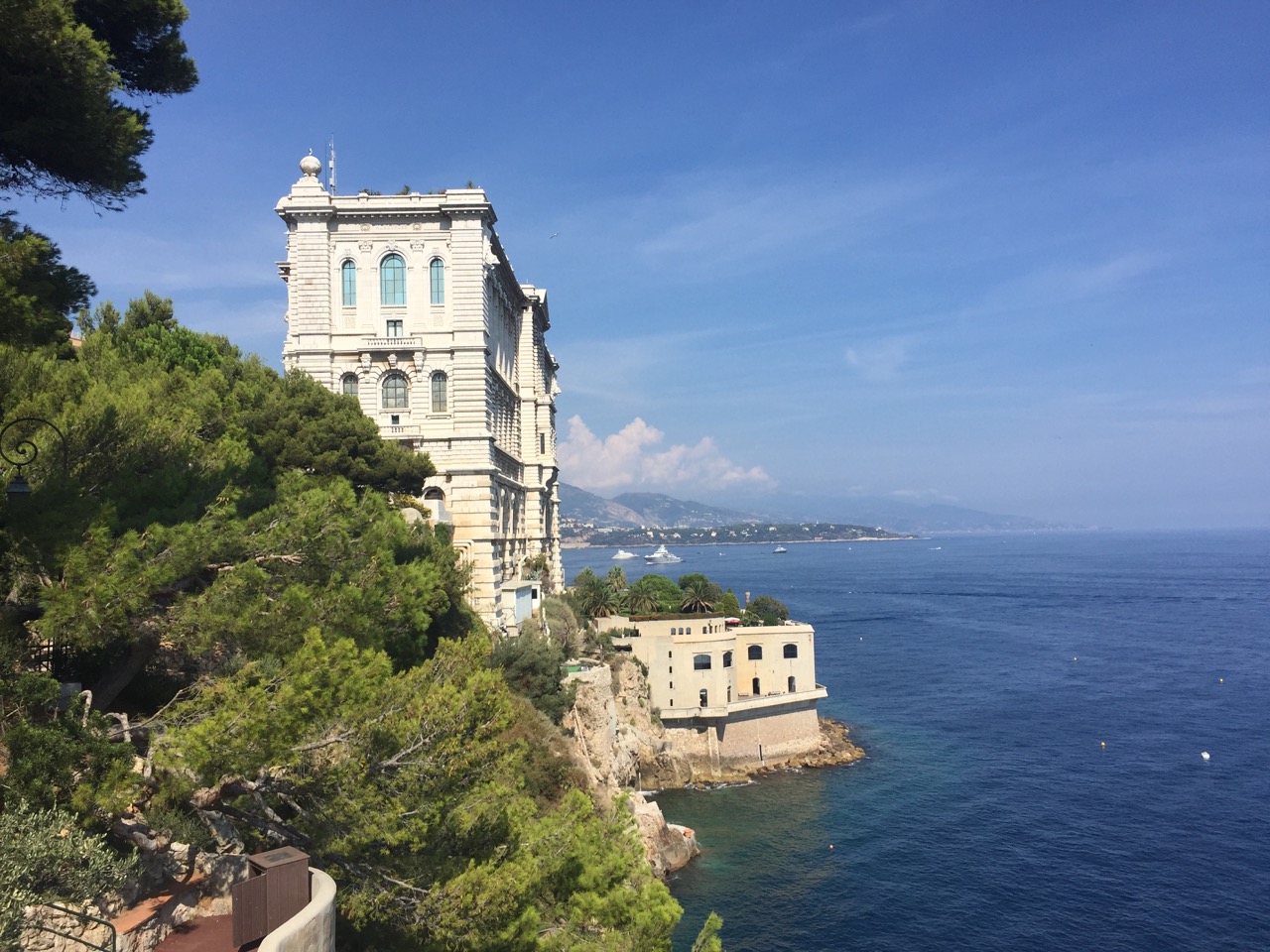
- A must-see is the Jardins Saint Martin, perched on the Fontvieille side of the cliff between the Cathedral and the Oceanographic Museum: head downwards towards the sea, to the little esplanade with the statue of Prince Albert I (the seafaring prince who founded the museum) and check out the amazing architecture of the building, that seems as if it was pre-built, lifted up intact by a giant and slammed into the cliffside. Entrance to the museum will set you back around 14 €.

The lovely and peaceful Jardins St Martin, located in the Old Town just between the Oceanographic Museum and the Cathedral

Oceanographic Museum viewed from Jardins Saint Martin with Cap Martin in the distance

The Oceanographic Museum viewed from Jardins Saint Martin with Cap Martin in the distance

- To leave the Old Town, head towards the opposite tip from the Palace, and walk down through the gardens after the Oceanographic Museum towards the Fort Antoine, which was built to defend the Principality against foreign invaders but now serves as an amphitheatre in the summer. It used to be totally exposed to the waves, before the extension of the Port Hercule began in 1999.

The Fort Antoine amphitheatre, located at the tip of the Rock

Walk down the steps around the new harbour jetty towards the soon-to-be-moved Yacht Club and you will be on Quai Antoine 1er, back at sea level. From there, you can either walk back along the U-shape of the port and admire some of the boats, or else use the Bateau Bus to cross the harbour towards Monte-Carlo and then take the public lift up to the Casino.

Introduction to the Old Town of Monaco

5 Oct The whole Rock of Monaco viewed from the Jardin Exotique

The whole Rock of Monaco viewed from the Jardin Exotique

This is also known as “Monaco Ville” or “Le Rocher” (the Rock) and is the government and historical centre of the Principality, as well as being one of the two main tourist sites. The old town of Monaco might seem a bit too clean and glitzy for connaisseurs of other more authentic villages in the region, such as Sainte Agnès, La Brigue or even Villefranche – it is Monaco after all…  However, if you follow the advice below, it is always possible to have a nice walk around, trying to avoid the hordes of tourists and souvenir shops. That is why the best time of day is dusk, once the souvenir shops have closed, the streets are quieter and the crowds of tourists have taken their coaches either back to their cruise ship or to drive round the harbour and “visit Monte Carlo” in 15 minutes.

Main attractions (to be detailed in subsequent articles):

- The Oceanographic Museum, an amazing building built into the side of the cliff and simply one of the best aquariums in Europe: official website

The Oceanographic Museum viewed from Jardins Saint Martin

The Oceanographic Museum viewed from Jardins Saint Martin

- Follow mywalking tour around the beautiful small pedestrian streets, churches and gardens.

Typical medieval alleyways of Monaco's old town

Typical medieval alleyways of Monaco's old town

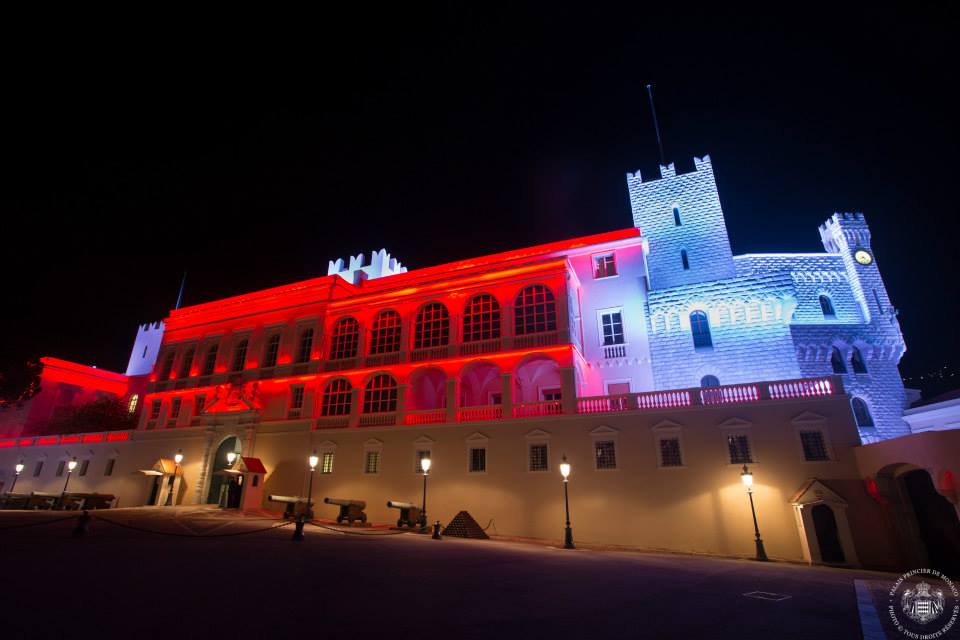
- The Prince’s Palace, official residence of the Prince and Princess of Monaco, location of the Royal court, almost a city within the city and most recently the main theatre of the stunning royal wedding in July 2011. Read more in the “Walking Tour” article and on the official website.

The clock tower of the Prince's Palace of Monaco viewed from the harbour

- The Cathedral: an imposing white marble edifice which recently celebrated its centenary, famous mainly for the tombs of the various Princes of Monaco, as well that of Princess Grace. The visit is actually a very moving experience for royal watchers, given the number of historical events that have been commemorated there, both happy and sad. More information on the official Cathedral website.

The Cathedral of Monaco

The Cathedral of Monaco

- Some small museums: the Monte Carlo Story and the museum of Old Monegasque Traditions, only if you are really enthusiastic about the history of Monaco or the royal family. Otherwise, don’t bother and instead, just walk down to the port and the Grand Prix circuit, follow the trail of yachts around the waterfront and head towards Monte Carlo and the casino.

Monaco or Monte-Carlo? What’s the difference?

13 Sep

There’s always been a certain degree of confusion between the two names, which is especially unfortunate as both of them are pretty famous. So just to clarify once and for all, here’s the difference.

MONACO is basically the name of the country. Yes, Monaco is actually a real country, a constitutional monarchy in the same vein as San Marino or the Vatican but with more leeway and independence, a full member of the United Nations and the Council of Europe and with its own royal family (or “princely” family), led since 2005 by H.S.H. Prince Albert II. More on this elsewhere.

View over most of the Principality of Monaco east from the Palace square

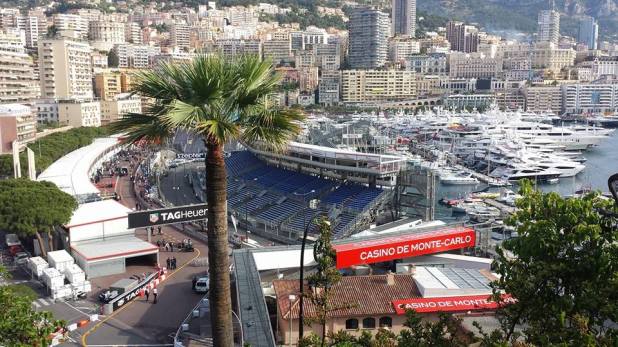
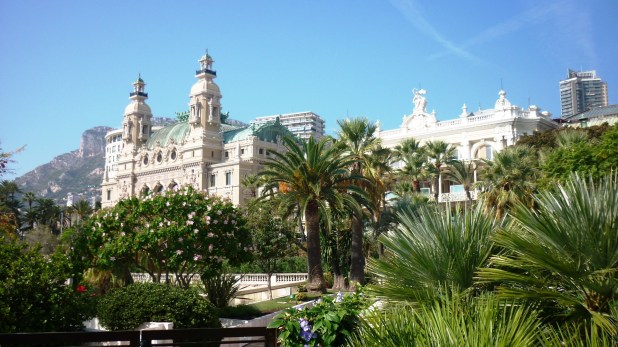
The city of Monaco is split up, like any other town, into several neighbourhoods: among others, MONTE-CARLO, which happens to be the area on the hill overlooking the main harbor that houses the casino and the luxury hotels.

The emblematic Casino of Monte-Carlo by night during the Xmas festivities

Contrary to some information that freely circulates online, Monte Carlo isn’t the capital of the country. The official capital is the neighbourhood known as “Monaco-Ville”, also known as “Le Rocher”, which is basically the large promontory that cannot be missed once you are in town and that houses the medieval Old Town, the Oceanographic Museum and the Prince’s Palace, as well as several government institutions.

Oh and finally… Despite the fact that the names are almost homonyms in several languages, including Chinese, neither Monaco nor Monte-Carlo have anything to do with Morocco!

Follow

Get every new post delivered to your Inbox.