Villa Ephrussi de Rothschild in Cap Ferrat

The stunning Villa Ephrussi de Rothschild in Cap Ferrat

Cap Ferrat is one of the three major capes of the French Riviera and in my opinion probably the most beautiful. Like a long arm jutting into the Mediterranean, it separates the bay of Villefranche and that of Beaulieu, about half way between Nice and Monaco. It is also one of the most expensive parts of the coastline in terms of real estate, dotted with the exclusive and secluded Belle Epoque style villas of the rich and famous who first discovered the Riviera in the 19th century and found that the climate and scenery were so amazing that they decided to stay.

One of the most prominent of these villas and the only one open to the public is the Villa Ephrussi de Rothschild, built by Beatrice Ephrussi de Rothschild, a very wealthy French socialite, between 1905 and 1912. She was lucky enough to be able to pick one of the best sites on the Cape, at the top of a narrow isthmus dominating the sea that provides stunning views both east towards Beaulieu and Italy and west towards the deep waters of the Bay of Villefranche and its ancient harbour. Upon her death in 1934, she donated the property to the Institut de France, who have maintained it to this day.

Continue reading

Monaco’s Exotic Garden and the Villa Paloma museum

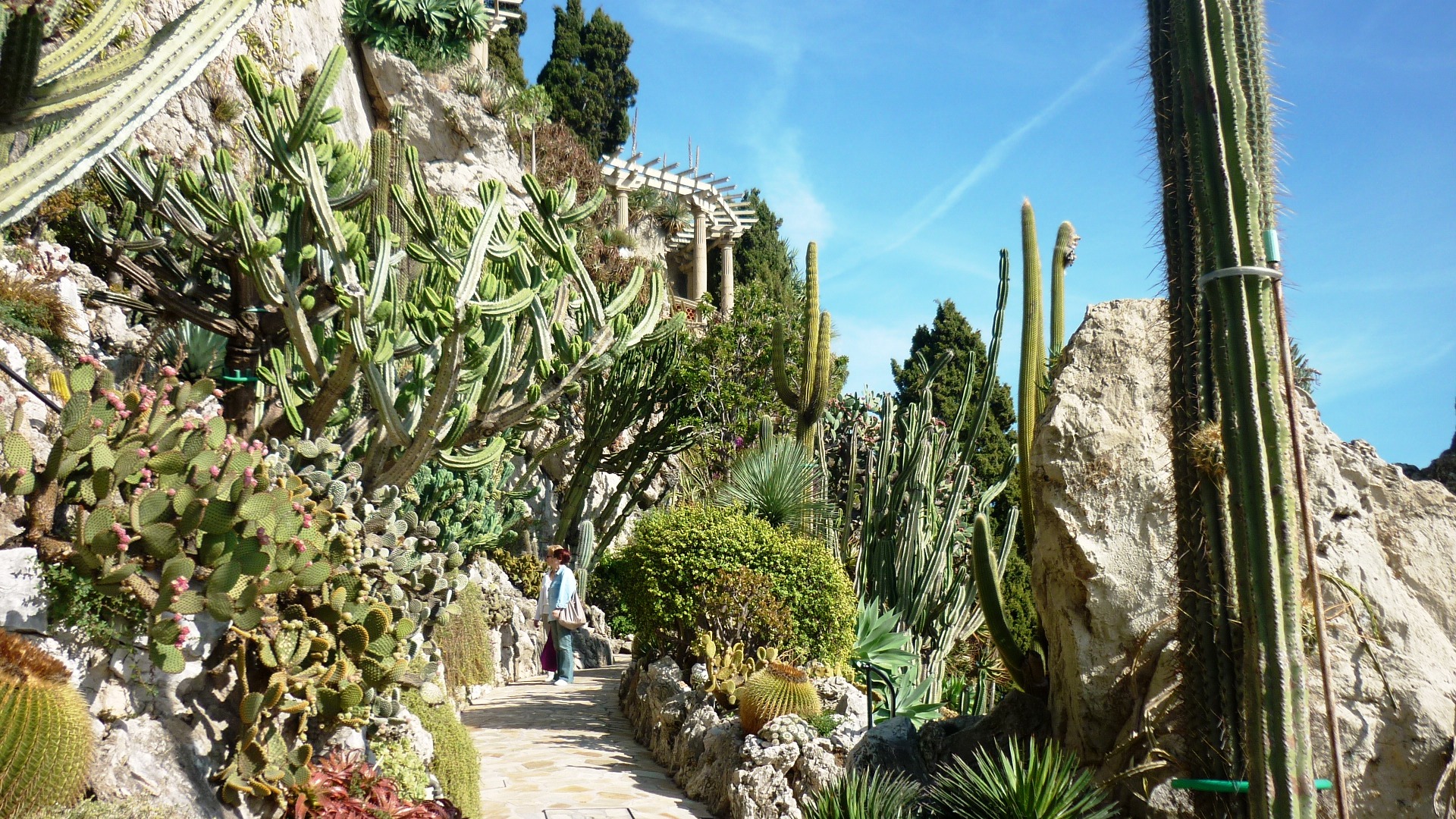
The stunning Exotic Garden of Monaco

The Jardin Exotique (Exotic Garden) of Monaco is one of these places which is stunningly beautiful but is generally neglected by most visitors to the Principality, simply because it is so far out of the way. Located on a rocky promontory at the north-western entrance of Monaco, jutting out over the Old Town and the Fontvieille area, most people just admire it from a distance whilst visiting the Palace Square without travelling up there, which is a bit of a shame. At the same time, the isolated location is part of its charm, affording stunning views over the whole of Monaco.

If you only have a few hours or a day in Monaco, I will be the first to tell you to stick to the main attractions, like the Old Town, the main port and Monte-Carlo, where the world-famous Casino is located. But if you are here for a bit longer or on a repeat visit and have a couple of hours to spare, I would definitely recommend a trip up the hill for a visit of the Exotic Garden and the newly-opened New National Museum of Monaco next door at the Villa Paloma.

Continue reading

Across the border into Italy… Ventimiglia and its Friday market

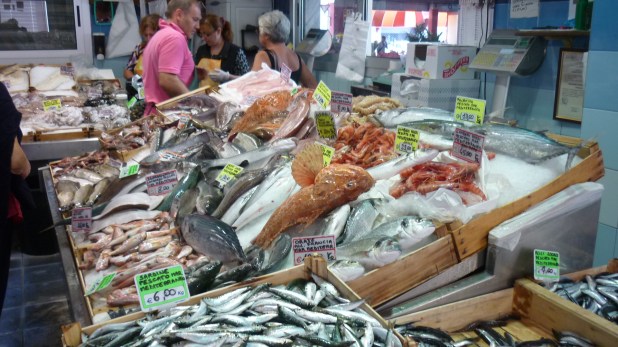
Ventimiglia, the Italian border town on the Riviera – hardly Rome, Florence or Venice but suitably picturesque for an “I’ve done Italy in a day” moment…

Some readers may not be aware of this, but Italy is just round the corner from the French Riviera… In fact, if you are in Menton, you can easily walk across the border! The Italian town of Ventimiglia (Vintimille in French) is located at the terminus of the coastal railway line that runs between Nice and Monaco, so you can easily have an “I’ve set foot in Italy” moment during your visit on the Riviera and add it to your countries’ list if you’ve never been to places like Rome, Florence or Venice.

Ventimiglia is pretty much like any other border town, so nothing too spectacular, but most visitors tend to travel there for its (in)famous Friday clothes and leather good market. I figured last month that I may as well give it a go one of these days to see what it is really like and if the crowded trains and traffic jams encountered every Friday were actually worth it, so I took a train early on a very warm and sunny September’s morning and gave it a go. Here’s my verdict…

Continue reading

What about the mountains?

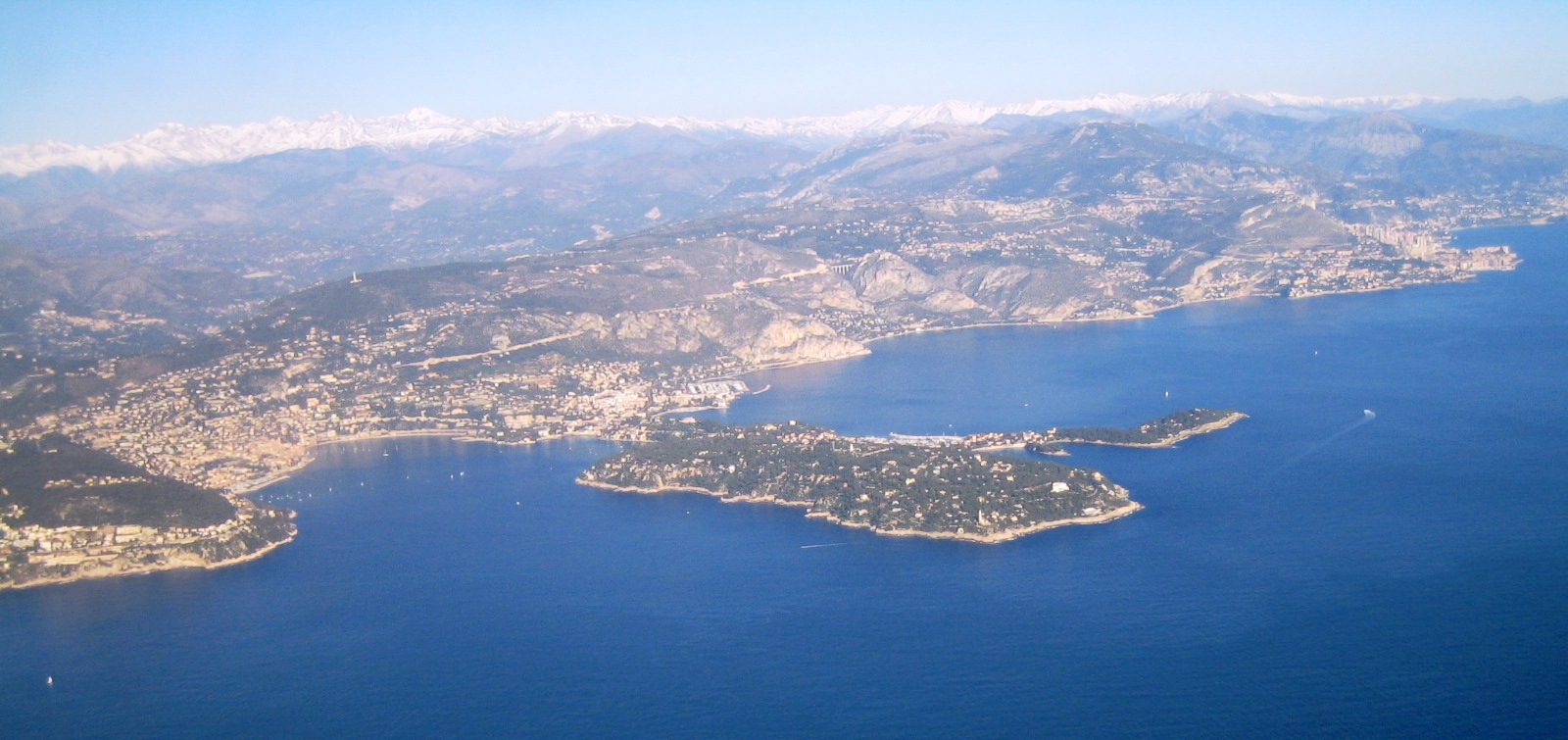
The Alps lurking just behind Cap Ferrat and Cap d'Ail, a great view thanks to British Airways!

What most visitors do not realise, especially in the summer months, is that the “Alpes Maritimes” area where the Riviera is based is named that way for a reason: basically because, just behind the coastal strip, lie the Alps in all their glory (actually, they’re quite visible on any flights heading towards Northern Europe).

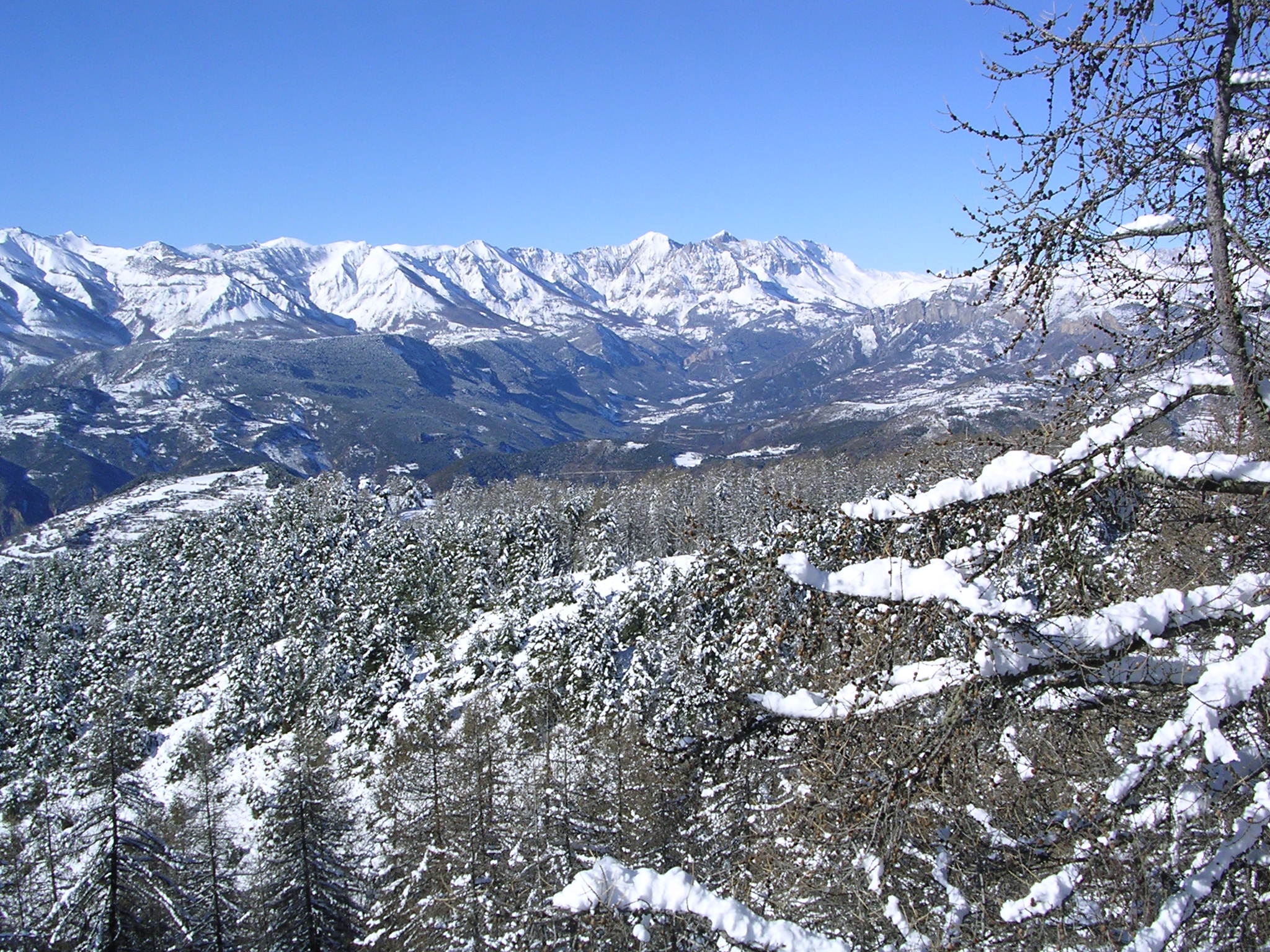
The mountains, which go up to over 3000m in the Alpes Maritimes, cover almost 90% of the department, which makes for great hiking in the summer and skiing/other snow sports in the winter for those that way inclined. This is the main reason that Nice spent loads of money on an ultimately unsuccessful bid a couple of years ago to host the 2018 Winter Olympics: I thought it made sense, at least on paper and was a good idea to get away from the general stereotypes of the Côte d’Azur.

In this respect (and actually many others), the French Riviera is a bit like California: in April for example, you can go skiing in the morning and have enough time to get back to the coast and spend the afternoon lying in the sunshine on the beach, given that some of the ski resorts are only 90 minutes’ drive from Nice

The most easily accessible resorts from Nice are Auron and Isola 2000, with other resorts such as Gréolières-Neige, Valberg and Limone Piemonte (in Italy) also within easy access for a day trip.
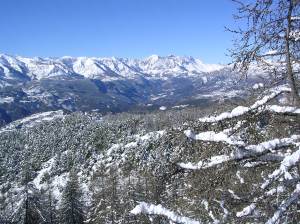
Winter wonderland: the mountains just outside the ski resort of Valberg, about 90 minutes north of Nice

Limone Piemonte is my personal favourite, even though I’m not a great fan of skiing, mainly because of the culture shock you get crossing the border into the Piemonte area of Italy. It is located north of the Roya Valley just across the border, passing through the Col de Tende and its historical but rather dodgy and ancient tunnel. Access is possible by car (2 hours from Nice, 90 minutes from Monaco) or by a beautiful train journey from Nice, again through Ventimiglia – that takes slightly longer. The skiing is reportedly good (altitude of 1000m) but the main draw for me (you see where I’m getting!) is the quaint little village with excellent restaurants serving mountain-influenced Italian food: plenty of game, polenta and great pizzas at reasonable prices.
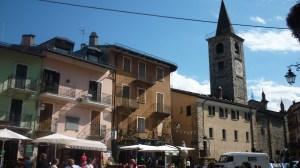
The mountain village of Limone-Piemonte

Naturally all these places are fully and more easily accessible during the summer and are wonderful for hiking, which I love, and all sorts of other “adventure sports”, which I don’t, as they generally involve dangling from great heights from a rather thin rope or getting very wet!

The hinterlands are generally separated in different valleys, the main ones being from west to east: the Var, the Tinée, the Vésubie and the Roya Valleys (my personal favourite, straddling the border between France and Italy), plus on the Italian side the gorgeous Val Nervia. I’ll write in a bit more detail about the individual valleys in due course.

Eze Village and the Nietzsche trail

Panoramic winter view of Eze Village and Eze sur Mer taken from the Fort de la Revère, at 700m altitude. In the distance you can see Cap Ferrat, the Bay of Villefranche and the Cape of Nice

Eze is one of the stops on the picturesque 40km stretch of railway line that runs east along the coast from Nice to Ventimiglia at the Italian border, passing through Monaco and Menton on the way. Listed in most of the guidebooks, the commune of Eze is structured on three layers up the side of a mountain and is famous for its eagle’s nest Village, perched at an altitude of 450m.

– At sea level, Eze Bord-de-Mer is mainly noted for a nice beach (rocky like most of the beaches in the area) with good surfing waves in the winter at the bottom of a beautiful bay surrounded by mountains. It is mainly a starting point for the hike up to Eze Village, as the train station is located there and the coastal buses pass along the main road.
– Eze Village is perched on a rocky promontory, just above the panoramic “Moyenne Corniche” road linking Nice to Monaco, at an altitude of about 430m.
– The Col d’Eze/Plateau de la Justice, located at 650m above sea level is a good spot for coastal hikes and picnics.

Continue reading

Cap d’Ail and the Mala Beach coastal path

View near the start of the Mala footpath looking back towards Monaco

This is really one of my favourite walks down the coast from Monaco into the town of Cap d’Ail just west (in the direction of Nice).  This small and pleasant residential town, built in several layers between sea level and the mountainside of the Tête de Chien, is not just a dormitory town for people working in Monaco, even though it is only one station away by train: there are several noteworthy attractions, notably the nice beaches, Belle Epoque architecture and various rather luxurious villas with numerous famous residents over the years, such as Greta Garbo, Winston Churchill, Lord Beaverbrook, Sacha Guitry and the Lumière Brothers.  If you’re interested in this, I’d advise to check out the  Cap d’Ail Tourist Office website, which has quite a lot of decent information.  

Continue reading

Cap Martin and the Sentier des Douaniers

Cap Martin and the Golfe Bleue beach

This coastal footpath is part of a longer walk between Monaco and Menton, alongside the picturesque Cap Martin, a rather wild peninsula with very secluded villas separating the two towns.  It affords fantastic views of Monaco, the perched village of medieval Roquebrune, Menton and the Italian coastline so is well worth a few hours on a beautiful afternoon.  The most scenic part however is located between the railway stations of Carnolès and Roquebrune-Cap Martin so I will be covering this in that direction, as the views are slightly nicer.  Walking at a leisurely pace, this section can be covered in about 2 hours and combined with a visit to Menton or Monaco to make a pretty complete day trip.

Continue reading

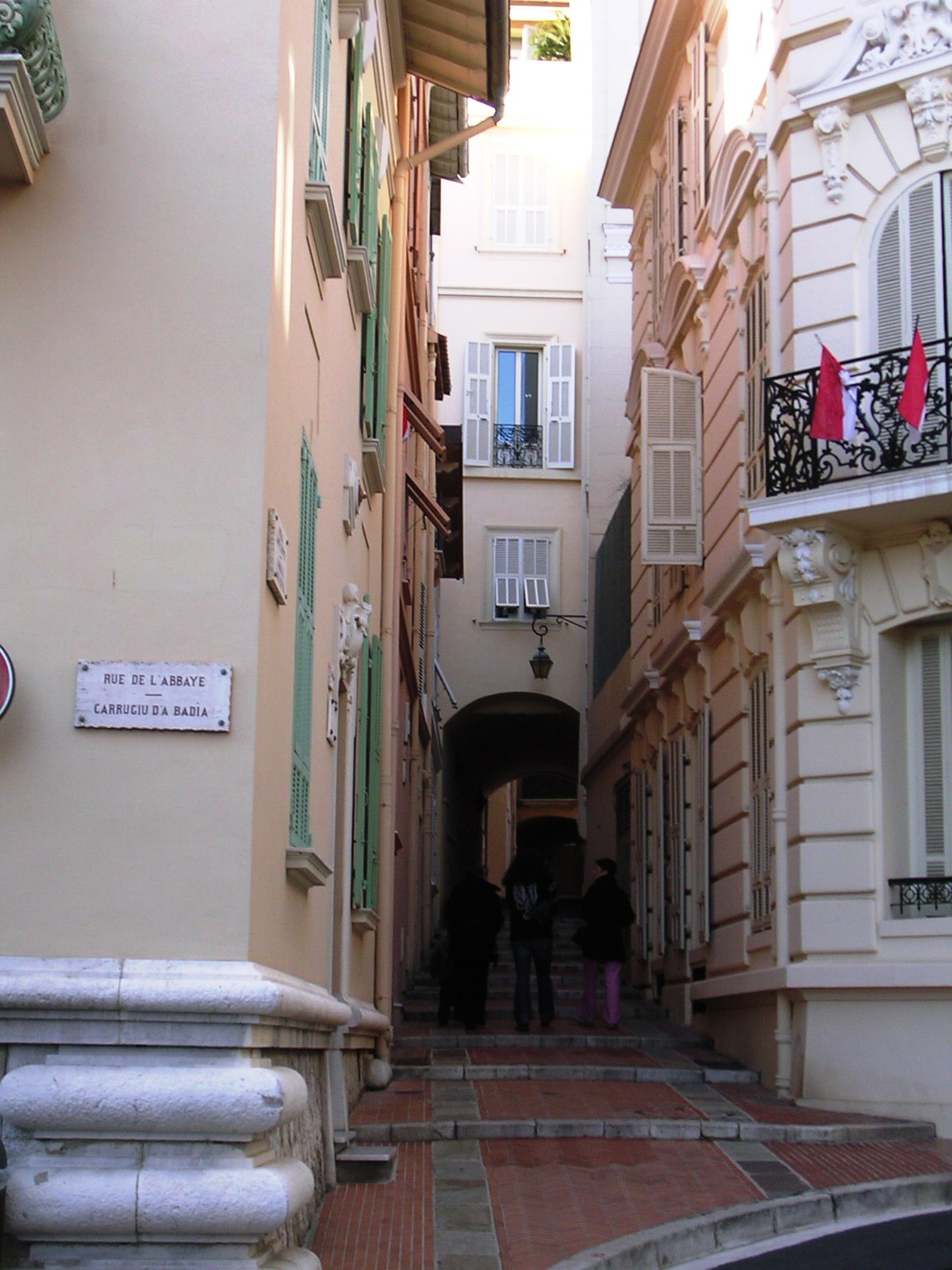
Typical medieval alleyway in the Old Town of Monaco

Walking Tour around the Old Town of Monaco

Typical medieval alleyway in the Old Town of Monaco

This is basically part of the walking tour I recommended to guests staying at my hotel a few years ago.  Allow about 90 minutes at a leisurely pace, excluding food pitstops or visits of monuments.

The tour starts at the Place d’Armes: the central market square within easy downhill access from the train station (turn right when exiting the train from Nice towards the “Fontvieille” exit” and go through the tunnel with travellators then follow the signposts and the crowds of people). The typically “Provençal” (ie. slightly overpriced but with lots of good quality “Mediterranean” produce) market is open every morning until around 12pm, so could be worth a quick stopover to have a nice coffee or to grab a snack – there are several reasonable places inside, including one selling “socca”, a typical regional pancake made of chick pea flower. The Place d’Armes is also a great place for people-watching and to see real Monegasque locals going about their daily business (quite a feat especially in the summer), and where most gossip is exchanged about what is going on in town.

Continue reading

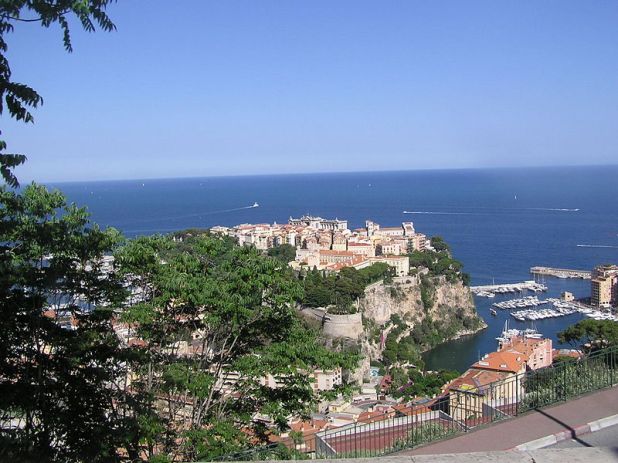
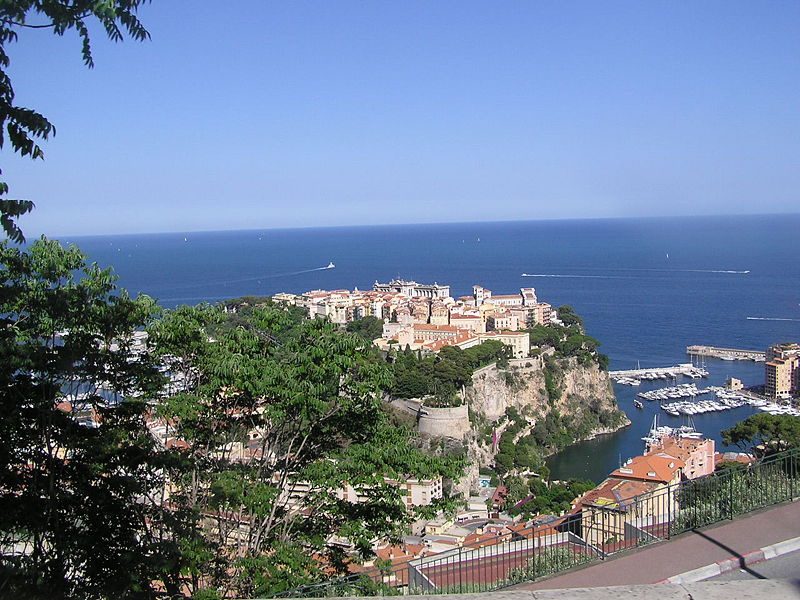
The whole Rock of Monaco viewed from the Jardin Exotique

Introduction to the Old Town of Monaco

The whole Rock of Monaco viewed from the Jardin Exotique

This is also known as “Monaco Ville” or “Le Rocher” (the Rock) and is the government and historical centre of the Principality, as well as being one of the two main tourist sites. The old town of Monaco might seem a bit too clean and glitzy for connaisseurs of other more authentic villages in the region, such as Sainte Agnès, La Brigue or even Villefranche – it is Monaco after all…  However, if you follow the advice below, it is always possible to have a nice walk around, trying to avoid the hordes of tourists and souvenir shops. That is why the best time of day is dusk, once the souvenir shops have closed, the streets are quieter and the crowds of tourists have taken their coaches either back to their cruise ship or to drive round the harbour and “visit Monte Carlo” in 15 minutes.

Continue reading

A walk around the historical neighbourhood of Cimiez in Nice

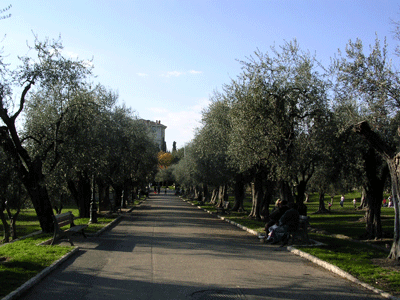
The lovely park of Cimiez, full of olive trees and nostalgia from the Jazz Festival that used to take place here

Cimiez may be slightly off the main tourist trail but is definitely one of my favourite neighbourhoods in Nice, located about 2 kms north-east of the Nice Ville train station on top of a small hill.  This pleasant and upper-class residential district used to be the Roman settlement of Cemenelum before becoming in the late 19th century one of the favourite haunts of the rich and famous, notably British aristocrats, explaining the sumptuous Belle Epoque architecture.  Queen Victoria was a regular at the Regina Palace Hotel, which still dominates the hill with its magnificent 200m wide façade, even though it is no longer a hotel, hence her statue at the entrance of the neighbourhood.  Attractions include the Matisse Museum, the Roman amphitheatre and archaeology museum, a neo-Palatine Monastery and an olive-filled park where the famous Nice Jazz Festival used to take place every July until it sold out, became too commercial and was moved to the centre of Nice. Here’s a quick guide to the area.

Continue reading