Archive | The Italian side of the border RSS feed for this section

The Italian hinterlands: Dolceacqua and the villages of the Nervia Valley

14 Apr

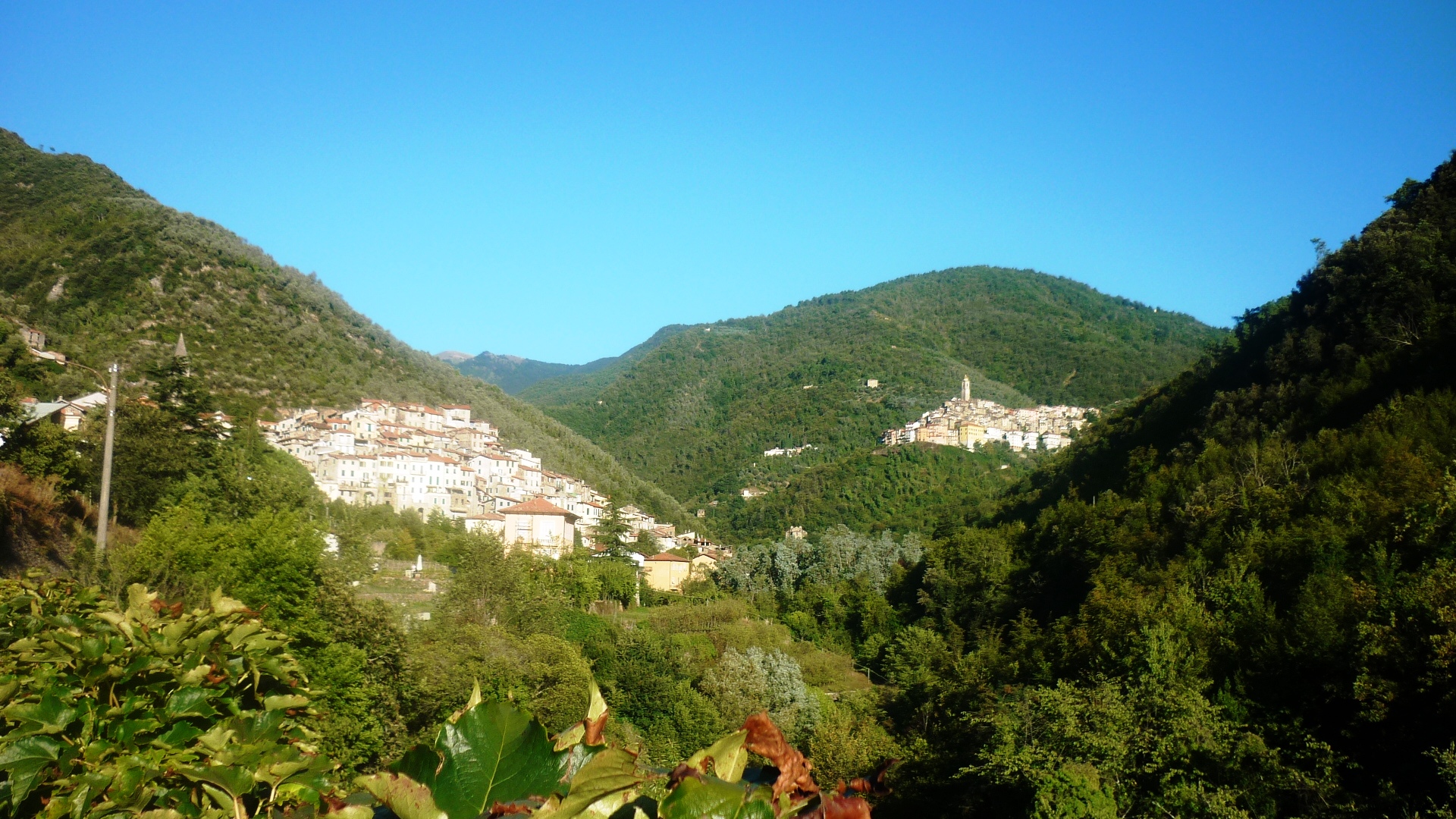
The villages of Pigna and Castelvittorio in the beautiful Nervia valley, a short hop from the French Riviera and a great culture shock!

An effortless excursion through the Nervia valley in Italy to the villages of Dolceacqua, Rocchetta Nervina, Isolabona, Apricale, Pigna and Castelvittorio, as well as some recommended restaurants.

Just across the border into Italy, the valley of the Nervia river (more colloquially known as “Valnervia”) is located just behind the eastern sections of Ventimiglia and is one of my favourite coastal valleys of the Riviera, with a winning combination of beautiful scenery, picturesque medieval villages and great Ligurian food at reasonable prices, all within only about 40 minutes drive from Monaco or an hour from Nice!

I would definitely recommend following this itinerary by car, as it affords far more flexibility than public transport, which is slow and tedious due to the very infrequent and unreliable bus lines, so you won’t really optimise your trip. Besides, the roads are well-paved, without too many bends and therefore easy to drive down since the valley is at a pretty low altitude, unlike most of its French counterparts. Also, the villages are a short hop from one another, around 10-15 minutes drive, so you can see everything easily within a day, or else just take your pick depending on what you fancy from the descriptions below.

After heading up from the eastern part of Ventimiglia into the hills through the flower-growing and rather unattractive industrial town of Camporosso, the valley narrows down and the scenery become greener, and within a few minutes, you’ll be in Dolceacqua.

Dolceacqua

The Doria castle and the Ponte Romano of Dolceacqua

The largest village in the valley, Dolceacqua is also the first you will see and is one of the most spectacular, with the very impressive ruins of the Doria castle perched high on top of the hill on the eastern bank of the Nervia. The village is divided into two sections: Terra, which is the oldest section on the eastern bank directly beneath the castle, and Borgo which is the more “modern” part of town on the opposite bank of the Nervia (“modern” means there’s a supermarket and shops but apart from that, both sides are pretty ancient). Both sides are connected by the Ponte Romano, a beautiful 15th century humpback bridge made of bricks: the view of the bridge and the Castle above it was immortalised by Monet in one of his late 19th century paintings.

Claude Monet's 1884 vision of Dolceacqua, pretty accurate!

Just get lost in the small streets and staircases of Terra, which are full of art galleries, local olive oil and wine shops and are absolutely magical at night when the whole place is lit up. It’s quite a steep climb up to the castle ruins, so wouldn’t really advise bothering, especially in the heat of the summer – the castle is nicer from a distance rather than viewed from the inside. Then head off across the Ponte Romano to Borgo, which has a nice square with frequent markets and plenty of good places to eat (see the end of this article for recommendations).

View over Borgo and the Ponte Romano by night, the banks of the Nervia are a lovely place for an after-dinner scroll!

Every summer (generally the Saturday after 15 August), there is an excellent fireworks and sound and light show which is well worth it due to the spectacular backdrop of the bridge and the castle, despite the village being absolutely packed out so come early!

Rocchetta Nervina

The unspoilt village of Rocchetta Nervina

Heading up the valley a few minutes north of Dolceacqua, you can do a slight detour and turn left off the main road towards the village of Rocchetta Nervina, about 5 minutes drive along a narrow but relatively easy road. This small village isn’t the most spectacular of the valley, but is extremely quaint, quiet and is located in a beautiful natural setting on the meanders of the river, with some canyoning possibilities if you are after some outdoor activities.

One of the green streets of Rocchetta Nervina

The countryside just outside Rocchetta Nervina

There are a couple of small restaurants on the square at the entrance of the village and plenty of medieval streets lined with potted plants to just wander around, so it’s a nice place for a quick wander around.

Isolabona   

Back onto the main road and heading up the Nervia Valley, it’s just under 10 minutes to the next village, Isolabona which is thus named because part of it is located on a small island in the middle of the Nervia.

Isolabona, located on a small island on the Nervia river

It’s worth stopping over for a walk around the village, which is pretty colourful and well-maintained, with the traditional olive oil and wine shops, a few beautiful squares (notably Piazza Piccola and Piazza Grande) and churches and another ruined castle built by the Dorias on top of a hill, though much less impressive than the huge one in Dolceacqua. Also the location is stunning, surrounded by the green hills of the valley and the luxuriant vegetation.

The heart of Isolabona

Apricale 

From the centre of Isolabona, turn off the main road into the Merdanzo valley and take a small detour to the perched village of Apricale, which is a short 5 minute drive away and well worth it – for most visitors, it’s the most beautiful village in the valley, though I personally prefer the slightly livelier and more accessible Dolceacqua.

Apricale, one of the main attractions of Val Nervia, just off the main valley

The setting is pretty stunning, perched a bit like Rocchetta Nervina on a rocky spur and it’s a very nice place to wander around, even though by now you’ll be pretty familiar with the layout of all the villages so they’ll all start to look the same! Of note is the large main square and the coloured facade of the 1863 town hall with its beautiful pink frescoes, in contrast with some of the stark brick facades of the other streets. The square is dominated by the 11th century Castello della Lucertola which saw the domination of the village switch between the Dorias, the Savoy royal family and other local families. Apricale is also full of small shops, some small hotels and very typical restaurants (generally more upmarket than in the other villages), so is quite a nice base if you want to stay overnight, especially in the summer months.

Pigna and Castelvittorio 

The stretch of the valley north of Isolabona on the way to Pigna is probably the most beautiful, with incredibly lush vegetation and the craggy summits of the Alps looming in the distance, making a great contrast between the palm trees and the rocky terrain just behind. Just the scenery makes the short trip up to the next villages worthwhile, even though the villages themselves are nothing too exceptional.

Castelvittorio viewed from Pigna

The village of Pigna is located on the side of a hill, Lord of the Rings style: getting up to the village from the main road is a bit of a climb and not really worth it as there’s not much to see up there apart from a large church and some typical medieval streets which are a bit more run down than the other villages (not that many restaurants either).

One of the typical streets of Pigna

One advantage once you’ve climbed your way up is the great view over the valley, especially north towards the rival village of Castelvittorio, only about 2 kilometres away as the crow flies – you can even hear the church bells from there.

The village is most famous for its nearby thermal baths, the Terme di Pigna, which are located in a rather uninspiring modern high-rise building just down the road (probably the only modern building in the whole valley north of Dolceacqua). If you want to relax, you can get a day pass for the use of the swimming pools, jacuzzi and sauna at a reasonable rate and there are also hotel rooms there, though the accommodation is rather overpriced according to most online reviews. Something else the village is famous for is its white beans, which are grown nearby and which you can find in the local game stews.

You can also head off to the nearby village of Castelvittorio, perched high in the green hills, which pretty much marks the end of the Nervia valley. The village is best viewed from afar in Pigna as the place itself is quite run-down, especially compared to the villages further south, though there are still some pretty streets, a nice square and some pretty good local restaurants (which I still need to try).

You can really tell that this is the final frontier before the southern Alps, as the Nervia valley ends just to the north and the atmosphere of the village is quite a bit colder than the other places. Also, despite them being close by, historically Castelvittorio spent quite a long time under the administration of Piemonte, whereas the neighbouring village of Pigna was under Genovese administration.

Once you’re done with the northernmost villages, it’s only a short drive back to the coastline in Ventimiglia (around 35 minutes) and then you can take the motorway or the coastal road back to the French Riviera.

WHERE TO EAT AND STAY?   

It would be a crime to travel to Val Nervia and not to taste any of the delicious regional specialities, which are very different from what can be found in France or even on the Italian coastline: the hearty specialities of the valley involve game (wild boar, deer, rabbit), roast meat including goat, lamb, cold meats, wild mushrooms, white Pigna beans and the local freshly-pressed olive oil, all washed down with the local Rossese di Dolceacqua red wine. Try out some of the very filling and reasonably-priced Italian set menus including hot and cold starters, pasta, meat and dessert.

A typical cold meat starter at the Lago Bin hotel: note the wild boar ham stuffed with porcini mushrooms, delicious!

Some of the typical Rossese di Dolceacqua wines from Val Nervia

A word of advice though if you take this kind of menu: go easy on the pasta dish as otherwise you won’t be able to eat the meat or the dessert, which would be a shame. Most restaurants in Italy add a cover charge of around 2 to 3 € per person depending on the level of the restaurant, technically to cover the price of the bread sticks and other stuff provided on the table but mainly a trumped-up tip – up to you to decide if the service is good enough to deserve an additional tip afterwards (if they are friendly, which is generally the case in the Nervia Valley and outside of the main tourist spots in Liguria, I tend to add another 10% to the bill, which is more than enough in Italy).

Dolceacqua

-          The Pizzeria Il Borgo located on the main square in Borgo (across the river from the Castle) is open both for lunch and dinner serves excellent pizzas and other local dishes at prices impossible to find on the French side of the border.

-          La Rampa, located on the main square is famous for having some of the best pizzas in Italy. It’s open only at night and doesn’t take reservations, so you need to turn up at 7pm when it opens or risk waiting a bit. However, when I went there, I was slightly disappointed by the pizzas which whilst being pretty good, weren’t as exceptional as the hype suggested.

Eating out in Dolceacqua at night, here locals from the valley having pizza at La Rampa

-          There are two traditional “agriturismi” on the opposite side of the river in the Terra part of the village beneath the castle and lost in the small streets behind the large church which I’ve never tried but which have a great reputation amongst the locals: U Fundu and I Gumbi da U Zena (the latter is only open from Thursdays to Sundays). Both have typical gastronomic menus at between 20€ and 30€ and have their own olive oils, so well worth trying – I’ll definitely stop by to review them on my next trip to the valley.

Rocchetta Nervina

-          On the road to Rocchetta, about 1 km before the medieval village, you cannot miss the Lago Bin Hotel and restaurant, which is a pretty comfortable resort with a swimming pool that I like to visit to take a quick weekend break in the spring or the autumn. Prices are reasonable in basic 3-star rooms which are nothing special but afford a nice place to sleep overlooking the valley and the possibility of waking up, enjoying a great view from your balcony and having breakfast in the peaceful valley is absolutely priceless. Watch out for special off-season deals on their website. The restaurant, without being exceptional, is pretty decent too, with good quality and very filling local fare and a reasonable wine list. Just be aware that the decoration of stuffed animals can be rather jarring at the dinner table, as are the crowds of locals indulging in wedding parties on weekends with some very cheesy live music.

Breakfast al fresco at the Lago Bin Hotel in Rocchetta Nervina, great to breathe some fresh air in the morning!

Apricale

-          La Favorita, located on the left of the main road just before arriving in the centre of the village (about 500m before the entrance), has great roast and grilled meat.

-          La Capanna da Baci’ is another more upmarket place in the village just underneath the main square that has an excellent reputation with the locals who live in the valley. It also has some rooms for people wanting to spend the night on the spot.

-          If you want to spend the night in the village, check out the Apricus Locanda guesthouse which has a limited amount of pretty traditional and renovated rooms, though not particularly cheap (around 100€ per night). I’m mainly recommending it because it has some very good reviews and standards of family-run places of this type are generally pretty high in the region. For those staying in Apricale, be aware that the  whole village is pedestrian, so if you have luggage, you’ll need to park at the foot of the village, then drag your cases uphill.

Isolabona

-          There’s nowhere decent that I know of in the centre of the village, but if you carry on about a kilometre north towards Pigna, I can definitely recommend the U Cian agriturismo (on the left hand side of the main road, watch out for the signs), which has a very refined and reasonably priced gastronomic menu that, although filling, puts quality before quantity. The setting is also very traditional, with great views over the valley.

Serving the delicious pasta course in copper bowls at U Cian

Pigna and Castelvittorio

-          There is a great family-owned place where I once had lunch at the bottom of the village (opposite a pretty ancient petrol station which seems to come straight out of the Sicily section of the Godfather film) – unfortunately I can’t remember the name but there’s a great view over Castelvittorio and the aforementioned petrol station.

View over Castelvittorio from the excellent but un-named restaurant in Pigna, this should help you track it down!

The food was really excellent, with a delicious goat stew simmered with some Pigna beans at a very reasonable price. Next time I head up there, I’ll take note of the name but if you know it in the meantime, please let me know! Apparently there are also a couple of good restaurants up in Castelvittorio which have great reviews, but I haven’t had the opportunity to try them yet, so if you know of any, please feel free to comment below.

GETTING THERE

-          By car: By far the recommended option, from Nice or Monaco just take the A8 motorway across the Italian border and exit in Ventimiglia. From there, cross the city centre (avoid Friday mornings due to the market-related traffic) and once you’ve crossed over the railway tracks at the eastern end, head inland towards Dolceacqua. The road is very well-signposted so you can’t miss it.

How to get to Val Nervia by car from the Riviera, it's not far at all!

-          By public transport: not recommended unless you’re going to a specific spot in the valley (for example staying in a guesthouse in Dolceacqua or Apricale). In that case, take a train to Ventimiglia station then a bus to Dolceacqua and the other villages – you can find the timetables here. Just make sure you’re not in a hurry…

The Italian coastline: cycling from San Remo to Imperia

5 Feb

View over San Remo from Bussana

Last month I took advantage of a beautiful and sunny January weekend to head down the coast to the Italian town of San Remo to do something I hadn’t done in about 10 years: ride a bike! A friend had told me about the new cycling path along the coastline between San Remo and San Lorenzo al Mare, close to Imperia, the provincial capital, so I figured it would be a nice change from the normal hiking and would give me a bit of exercise, especially given that it’s pretty much flat all the way.

The cycling trail is a nice way of converting the old railway track that ran along the coastline from San Remo to Imperia, and that was replaced about 15 years ago by the new underground railway line currently in use. Instead of having it turned into a derelict strip full of debris and graffiti, the local government invested EU funds into turning into a very wide cycling trail, away from the traffic and affording great views of the little-known but scenic Ligurian coastline.

The NoloBici rent-a-bike stall near the old San Remo train station

Bicycles can be rented in a number of stalls dotted along the 24 km stretch and run by a company called Nolobici where you can either take out or return the bikes: prices range from a very reasonable 3 € for an hour on a normal bike to 10 € for half a day, which is pretty much the time required if you cycle the full distance like I did. Electric bicycles are also available for those wanting to enjoy the scenery without sore thighs at the end… The easiest place to pick up a bike is directly opposite the old train station in San Remo, close to the coastline and the old town, amidst the palm trees and the Belle Epoque architecture.

The start of the cycling path, just next to the Belle Epoque old train station of San Remo

The cycling trail first meanders through the palm-lined streets of San Remo then down the rocky coastline with great views of the blue sea and beaches whilst passing through through some delightful little villages, such as Bussana, Arma di Taggia (crossing the Argentina river) and Santo Stefano al Mare (probably the most picturesque section of the trip). All of these are great for a stopover and a quick coffee or snack at prices impossible to find on the French side of the coastline. There are plenty of viewpoints for pit-stops on the way and the whole cycling path is very well signposted – just beware of some of the rather poorly-lit tunnels, one of them is 1.5 kilometres long, which gets quite tedious and you come out feeling like Gollum after spending so long in the dark.

The cycling trail looking back towards San Remo: two lanes and a section for pedestrians

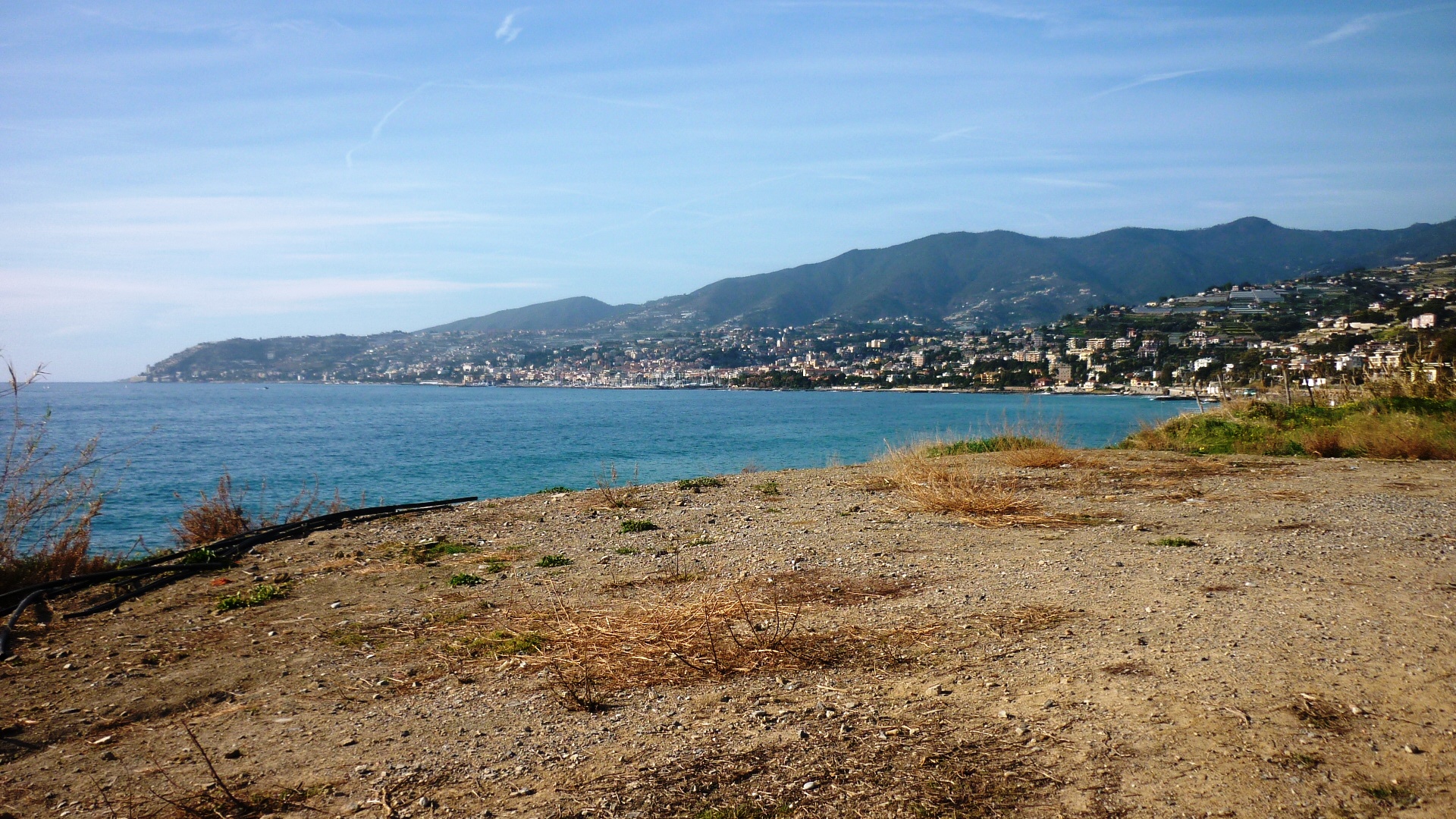
The beautiful Mediterranean Sea viewed from the cycling path near Bussana

Naturally, one of the high points was being able to have a great Italian lunch before heading back. We stopped off at the end of the first leg (after 18 kilometres) by the sea in the village of San Lorenzo Al Mare and ate by the beach under the sunshine at Ristorante Emy Bar, which I can strongly recommend: some wine, a delicious local fritto misto with fresh fish, green salad, a meringata dessert and coffee all cost 20€, so some great value for money. My friends had some black and white ravioli stuffed with fish with a salmon sauce that was out of this world! In addition, the service was extremely friendly with the owners willing to give us additional information on what to see in the area, much more so than could be expected on the French side of the border in more touristy destinations.

At the half-way point, a delicious Ligurian lunch at Ristorante Emy Bar by the beach in San Lorenzo al Mare

A delicious Ligurian fritto misto on the beach in San Lorenzo al Mare

If you do not wish to do the full 36 kilometre return trip to San Lorenzo, you can always stop in Bussana (8km return), Arma di Taggia (16km return) or Santo Stefano al Mare (24km return).

The quaint village of Santo Stefano al Mare on the way back towards San Remo

In any case, I can definitely recommend this as a nice day trip to breathe some fresh air and discover an area seldom visited by tourists to the Riviera, as well as doing some exercise – I certainly felt very proud after propelling myself 36 kms with my legs and certainly deserved a delicious cappuccino afterwards!

Getting there

-          By car: by far the recommended option, San Remo is about an hour’s drive on the motorway from Nice and 45 minutes from Monaco. Just drive down to the historical centre and the old railway station, there is ample public parking just by the bicycle renting spot, at a pretty reasonable 1.50 € per hour.

-          By train: only if you don’t have a car, the most flexible way is to buy a ticket to Ventimiglia at the Italian border , then buy a separate Italian ticket to San Remo (about 15 minutes, 5.20 € return). It is possible to get a through ticket from France but they tend to be more expensive and cumbersome to buy if the person at the counter isn’t cooperative (which is the case most of the time with French railway staff). The new San Remo train station is about 1.5 kilometres away from the old one, so best to take a local bus or walk about 20 minutes into the centre.

Across the border into Italy… Ventimiglia and its Friday market

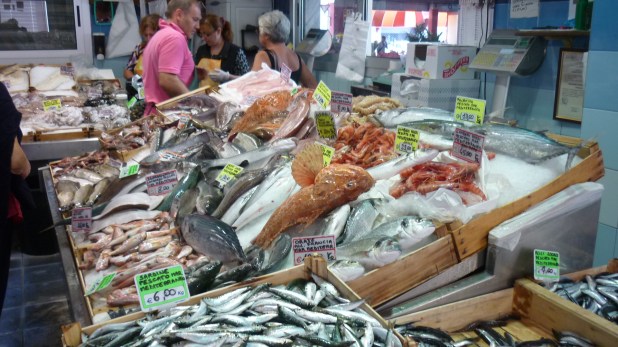
17 Oct The fresh fish market in Ventimiglia - apparenly the quality is so good that some top Michelin-starred chefs in Monaco take their pick here

Ventimiglia, the Italian border town on the Riviera - hardly Rome, Florence or Venice but suitably picturesque for an "I've done Italy in a day" moment...

Some readers may not be aware of this, but Italy is just round the corner from the French Riviera… In fact, if you are in Menton, you can easily walk across the border! The Italian town of Ventimiglia is located at the terminus of the coastal railway line that runs between Nice and Monaco, so you can easily have an “I’ve set foot in Italy” moment during your visit on the Riviera and add it to your countries’ list if you’ve never been to places like Rome or Venice.

Ventimiglia is pretty much like any other border town, so nothing too spectacular, but most visitors tend to travel there for its (in)famous Friday clothes and leather good market. I figured last month that I may as well give it a go one of these days to see what it is really like and if the crowded trains and traffic jams encountered every Friday were actually worth it, so I took a train early on a very warm and sunny September’s morning and gave it a go. Here’s my verdict…

Yes, the train that I hopped on in Monaco was actually jam-packed with elderly French people with shopping carts so I figured there must be some amazing deals at the Friday market. After a short 25-minute train ride along some stunning coastline (keep your eyes for some great panoramas of Monaco between Roquebrune-Cap Martin and Carnolès stations, as well as some amazing coastline and surfing beaches between Menton-Garavan and Ventimiglia itself), I got off in the rather grotty Mussolinian-style train station and followed the crowds through the rather picturesque “new town” towards the covered market.

This part, with typical local fruits, vegetables and fish and open virtually all week, not just on Fridays, is actually very pleasant and well worth the visit. The prices are generally lower and the quality higher than what you will find across the French border, with plenty of typical Italian produce such as dried tomatoes, olive oil and balsamic vinegar.

The very Mediterranean fruit and vegetable section in Ventimiglia market, this is the kind of thing you would expect to find in Italy!

Some Italian salami and prosciutto in the Ventimiglia market

However, the typical Friday section left plenty to be desired: plenty of stalls of rather unoriginal and not so cheap (ie. more or less the same price as in the high street) handbags, shoes and clothes: I’ll leave you to judge from the photos below. So the watchword for this part is: don’t bother braving the Ventimiglia crowds on a Friday, it really isn’t worth it.

Some typical "bargains" in the Ventimiglia Friday clothes market

And here's the handbags section... Not really worth braving the crowds on a Friday to see this.

Despite this, the rest of Ventimiglia is definitely worth a look around. The place might seem pretty shabby and run-down when you arrive and certainly not as pristine as the French side of the border, especially Menton, but has its hidden charms, which you don’t have to wait until Friday to discover, unless you want to share the town with “bargain” hunting tourists who will get ripped off.

Get away from the bustling shopping streets full of cheap and tacky alcohol shops surrounding the train station (yes, certain spirits like pastis are much cheaper in Italy than in France) and head towards the Roya river that separates the modern part of town (where the train station is) and the older medieval section, known as “Piazza”, on top of the hill. On the way, you can see some typical Mussolinian/fascist ie. rather ugly architecture in the town hall that dominates the square near the market and the river.

You can first follow the river down towards the beach which is extremely pebbly but affords lovely views of the coastline westwards in the direction of France, and where you can see Monaco and Cap Ferrat on a clear day. The beach area is nothing too special, just a long strip of beach restaurants which are quite dead anytime other than summer evenings.

Pebbly beach but lovely view over Monaco and Cap Ferrat from the beach in Ventimiglia, at the mouth of the Roya river

Then head back across the Roya with the pedestrian footbridge: the area is very pleasant, with fishermen, plenty of waterfowl (ducks, swans and coots) and very large trout swimming in the shallow and crystal clear river water.

The old town of Ventimiglia, or "Piazza", viewed from the Roya footbridge

Walk up the slope to the heart of the medieval old town: to be honest, Ventimiglia’s “Piazza” is quite picturesque with plenty of small alleyways, old stone houses, ancient shops and a little square but there are plenty of much more charming and original old Italian villages nearby, especially in the Nervia valley, a bit further inland. But if you only have a day in Italy, you may as well check it out. There are also a couple of churches worth a photo and some nice views over the Roya Valley and the coastline, even though some parts of the area, heading northwards, are nastily industrial and bisected by the Nice-Genoa motorway.

The main square of the Old Town of Ventimiglia - rather quaint but you can find nicer old towns elsewhere in the region.

Eating

One good thing about visiting Italy is always the food: generally prices tend to be similar to those found in France, especially in upmarket places, but the quality is normally much higher, so better value for money. In the bustling shopping streets of the “new town” surrounding the train station, you can find plenty of cheap and good quality bakeries and cake shops to get a nice snack, as well as some good Italian coffee and ice cream.

The best places to eat can be found in the area across the Roya river, just below the old town, with a few cheap pizzerias and plenty of seafood and fish speciality restaurants – for those of you who like fish, you should try some Ligurian specialities such as fritto misto (fried anchovies and sardines) – in Italy you tend to get real fish as opposed to the frozen calamari rings and plastic “gambas” that you will find on the menu of some tourist traps in France.

The fresh fish market in Ventimiglia - apparently the quality is so good that some top Michelin-starred chefs based in Monaco buy their fish here

For pasta lovers, Pasta e Basta (see Tripadvisor page) is the place to go, just around the tip of the old town, facing the sea. The homemade pasta is absolutely out of this world, though far from cheap by Italian standards (anything between 10 € and 16 € depending on how refined your combination of sauce and pasta is). But honestly, I think it is worth it, given the size and quality of the portions. The place is very popular with people travelling across the border from France and Monaco for a nice meal, so make sure you book in advance, especially on weekends.

Getting there

By train: the easiest option is by far the train, as Ventimiglia is the terminus of the coastal line that runs from St Raphael, via Nice and Monaco. Allow about 25 minutes from Monaco (3.50€ single trip ) and 50 minutes from Nice (7 € single) – this option is the smoothest and the most comfortable but, as I mentioned earlier, try to avoid Fridays if you don’t want your ankles knocked in by shopping cart wielding old ladies looking for a pseudo-bargain at the market. Timetables on the French train website.

By bus: it is possible to get there by public bus, but a real hassle so only do it if you want to save some money but have a huge amount of time to spare, or else if you have an inexplicable phobia of taking the train… Take the line 100 bus from Nice or Monaco to its terminus in Menton (1 €, a bus every 15 minutes on average), then switch over to the 905 bus in the direction of Tende – it’s a 15 minute, 1 € ride to Ventimiglia but the buses on this line are very few and far between (see timetables here) so I would just take the train.

By car: nice and quick by the A8 motorway east from Nice (45 minutes) or Monaco (30 minutes) but you need to find somewhere to park once you get into town, try the railway station for minimal hassle. Don’t even try to venture anywhere near Ventimiglia by car on a Friday (this includes if you’re heading to any of the inland valleys) as the traffic across the town is a nightmare and you’ll immediately regret it. But if you follow my advice, you won’t be visiting on a Friday, so it won’t matter!

So in conclusion, if you only have a day to check out Italy and are using the train, Ventimiglia is just about worth the visit: the atmosphere is relatively pleasant and you definitely feel, coming from France, that you’re in a different country, which is your main reason for going there. Just don’t bother waiting for the Friday market, believe me, it really isn’t worth the hassle – on the contrary, try to avoid that day if you can. And bear in mind that if you have a bit more time, there are much nicer places to visit nearby in the hinterlands behind Ventimiglia or a bit further down the coast, as long as you have a car.   

Follow

Get every new post delivered to your Inbox.